The Better Marketing Blog
Better tips, tools, and tactics for the AI era.
Better tips, tools, and tactics for the AI era.

A year ago, do you remember how jazzed everyone was about blockchain?
Blockchain was going to end world poverty! It was going to revolutionize investing! Blockchain would cure the common cold! It would get us to Mars!
I still hold that kind of optimism. Problem is, the conversation this year has been dominated by one question: how will blockchain assets be regulated?
Bear with me, even if you find this question boring (this won’t be).
What we’re talking about is securities law, and how the U.S. Securities and Exchange Commission should regulate bitcoin, cryptocurrencies, and other blockchain assets.
The argument goes like this: when the SEC tells us how to think about blockchain assets, then the big institutional investors will come on board—and that will open up the floodgates of investment.
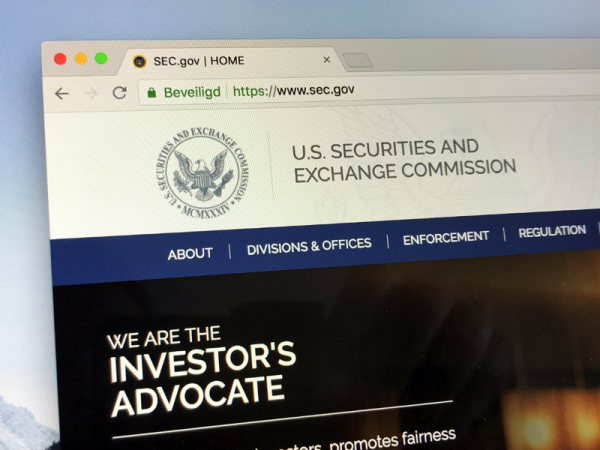
The SEC, meanwhile, has a difficult job. If they regulate too quickly, it could stifle innovation. The government took a light touch toward regulating the Internet in the early days, and that allowed a thousand flowers to bloom. Sometimes it’s better to “wait and see.”
And so the industry waits, holding its breath.
But isn’t it ironic that blockchain is the decentralized technology—the technology of the people—and we’re waiting on permission from a centralized government agency? Shouldn’t we be leading the SEC, not the other way around?
I recently hosted the Investor’s Stage at Blockchain Expo in Silicon Valley, and I had a terrific panel of blockchain investors and VCs. I asked them a question that flipped the script on this whole impasse.

Here’s the question I asked: What is one meaningful change the SEC can make for blockchain investing?
Instead of being reactiveto every scrap of gossip or hearsay from the SEC, this lets us be proactive in helping out this important government agency.
Remember: the job of the SEC is to protect investors. How can they best do this with a decentralized technology that allows anyone to invest?
What are your ideas?
When I asked this question of my panel, Rob Nance of CityBlock Capital had a terrific idea: why doesn’t the SEC create a kind of “certification” that requires investors to go through training?
It was Rob’s idea, but I’m running with it. Hear me out.
Today, most blockchain investments are limited to “accredited investors,” which means you make over $200,000, or you have a net worth of at least $1 million (your house doesn’t count). The argument goes that the rich can afford to make riskier investments—and besides, they know what they’re doing.
There’s widespread agreement that this rule is arbitrary. If you make $190,000, you are incapable of managing money, but as soon as you hit $200,000, you are now imbued with magical investing powers?
It seems silly that investors have to pass the “accreditation” test to spend their own money, when anyone can walk into a casino and gamble away their life savings. You can literally “invest” all your money on scratch tickets at a gas station—no accreditation needed!
Imagine if the SEC created an investor training program that would allow investors to become “certified” or “licensed” to these more complicated investments. Think about a driver’s license, which is a rigorous way of ensuring the safety of everyone on the road.
Put another way, imagine that certification replaces accreditation. “Certified investors” instead of “accredited investors,” with certification open to all.
The model already exists: investment advisors, broker-dealers, and other financial industry professionals must first obtain financial securities licenses. Why can’t we have a license for the general public?
Call it investor certification (open to all).
This idea would greatly serve the public good:
There’s even an SEC division, the Office of Investor Education and Advocacy, that could spearhead this initiative. And for our part, we’d be happy to help.
To summarize: Get rid of investor accreditation (available only to the rich), and create investor certification (available to all).
Why are we sitting on the sidelines? Let’s show some hustle. Let’s get ideas that the SEC can use to help the blockchain industry grow and thrive.
We welcome your ideas on the government regulation of blockchain: just drop us a line. And subscribe to our weekly investor briefing for more ideas from the smartest minds in blockchain.